
Explore Ngorongoro Conservation Area – Tanzania
Why Visit Ngorongoro Conservation Area – Tanzania National Parks?
The Ngorongoro Conservation Area is situated in northern Tanzania, within the Arusha Region. It lies to the west of Arusha town and forms a key part of Tanzania’s renowned Northern Safari Circuit.
The area borders the Serengeti National Park to the northwest and Lake Manyara National Park to the southeast.
Covering an expansive area of approximately 3,202 square miles (8,292 square kilometers), the Ngorongoro Conservation Area includes a variety of landscapes such as highland plains, savannah, forests, and volcanic terrain.
At its heart lies the Ngorongoro Crater, a vast, unbroken caldera spanning around 102 square miles (264 square kilometers), making it the largest intact volcanic caldera in the world.
Wildlife
The Ngorongoro Crater and Conservation Area are renowned for their incredible wildlife diversity and density.
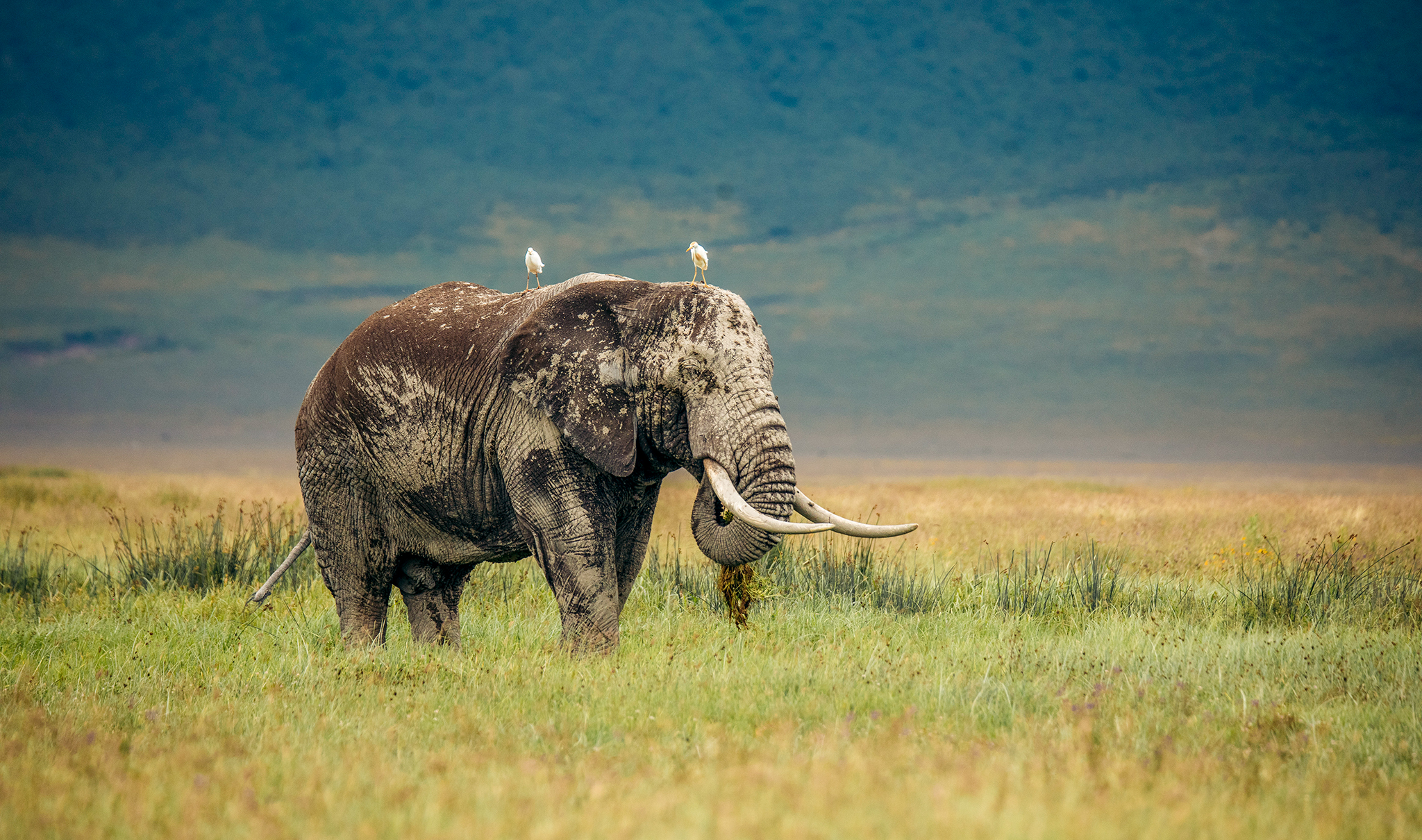
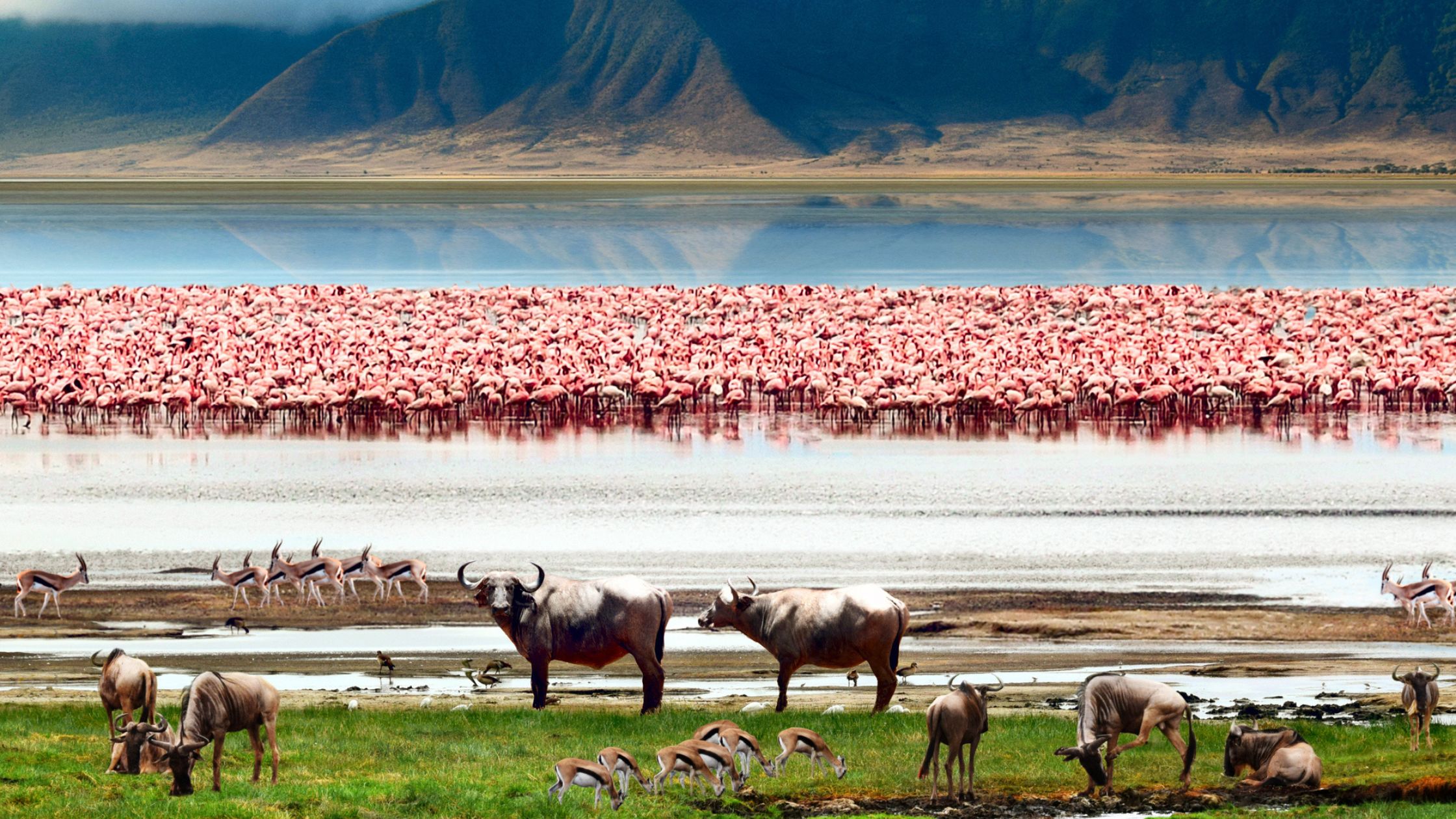
The crater itself acts as a natural enclosure, hosting large populations of the “Big Five” (lion, leopard, elephant, rhino, and buffalo), as well as other species like wildebeest, zebra, and gazelles.
The wider Conservation Area also supports the Great Migration, with millions of wildebeest, zebras, and gazelles passing through annually. It’s also one of the few places in Tanzania where visitors have a chance to spot the endangered black rhinoceros.
The area also supports large flocks of flamingos and over 500 species of birds on Lake Magadi at the crater floor.
Attractions
Ngorongoro Crater
The world’s largest unbroken volcanic caldera, it’s a natural sanctuary for diverse wildlife, including the “Big Five” (lion, elephant, buffalo, rhino, and leopard).
Olduvai Gorge
A significant archaeological site where early human ancestors’ remains have been found, providing insights into human evolution.
Gol Mountains
Offers wilderness experiences with pink cliffs and is a key point for the Great Migration.
Olmoti and Empakaai Craters
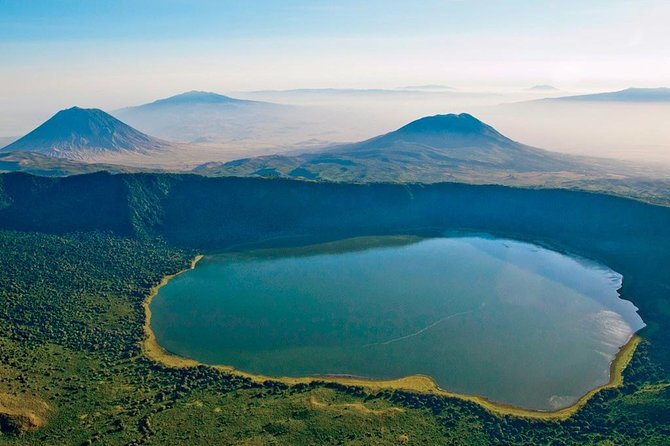
These smaller craters offer unique landscapes and opportunities for exploration, with Olmoti known for its grassy floor and Empakaai for its soda lake.
Ndutu Area
The Lake Ndutu area is known for its strong lion and cheetah populations, as well as other predators like jackals and wild dogs.
Activities
- Game Drives: The crater floor is a wildlife hotspot, offering excellent opportunities for game viewing, including the “Big Five” (lion, elephant, buffalo, rhino, and leopard).
- Bird Watching: Ngorongoro is a haven for bird enthusiasts, with numerous species to spot, including kori bustards, grey crown cranes, and secretary bird.
- Archaeological Tours: Discover the rich history of early humans at Olduvai Gorge, a significant archaeological site, and explore the Olduvai Gorge Museum for insights into human evolution.
- Walking Safaris: Explore the park on foot, accompanied by an armed ranger, for an adventurous way to experience the natural environment.
- Crater Rim Walks: Enjoy breathtaking views of the crater and surrounding landscapes with guided walks along the crater rim.
- Empakaai and Olmoti Crater Excursions: Explore these smaller craters, hike to their rims, and enjoy the scenic beauty and unique ecosystem
- Lake Ndutu Safari: Visit Lake Ndutu, especially during the migration season (December to March), for excellent wildlife viewing.

Best Time to Visit
The best time to visit the Ngorongoro Conservation Area and Crater for optimal wildlife viewing is during the dry season, from June to October. This period offers the best weather and game viewing opportunities due to animals congregating around water sources, and shorter grass makes spotting them easier.