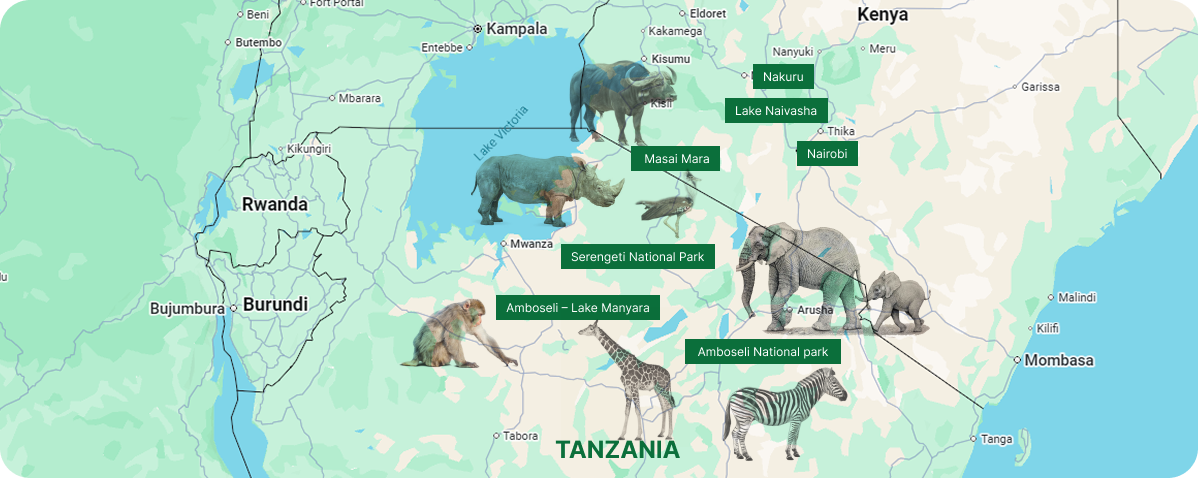
After an early breakfast, your private driver/guide will pick you up at 7:30 AM from your hotel, residence, or any preferred location in Arusha.
Traveling in a 4×4 Land Cruiser, you’ll begin your journey through the scenic Maasai heartland, where you may spot herders in their traditional colorful shukas guiding their cattle across the plains.
By mid-morning, you’ll arrive at the Ngorongoro Conservation Area and be greeted with panoramic views from the crater’s rim—an awe-inspiring vista stretching across 256 square kilometers. Descend into the crater floor, a rich ecosystem of swamps, forests, and grasslands teeming with wildlife.
Expect to see lions, leopards, elephants, buffaloes, wildebeests, zebras, and possibly a flock of pink flamingoes at Lake Magadi. In the evening, ascend the crater wall and catch a breathtaking sunset before checking in to your accommodation for the night.
Day
2
Ngorongoro to Lake Manyara
After breakfast, head out on a short drive to Lake Manyara National Park, renowned for its dramatic scenery and diverse wildlife.
The lake’s edge often glows pink with thousands of flamingoes, and the surrounding forest and grasslands host elephants, giraffes, warthogs, and the elusive tree-climbing lions. Smaller animals like the dik-dik, a tiny antelope, also make appearances.
Ernest Hemingway once described the park as “the loveliest I had seen in Africa,” and its beauty will stay with you long after you leave. Spend the evening at your safari lodge or tented camp near Lake Manyara.
Day
3
Lake Manyara to Arusha
Enjoy a relaxed breakfast before checking out and beginning your return journey to Arusha.
The two-hour drive offers a final chance to take in the Tanzanian landscape. Along the way reflect on the rich tapestry of wildlife and culture experienced over the past few days.
Upon arrival, you’ll be dropped off at your hotel, residence, or the airport, concluding your safari adventure.
All scheduled airport and hotel transfers in Nairobi
Full-board accommodation in luxury lodges and tented camps
Daily meals and bottled water throughout the safari
AMREF Flying Doctors emergency evacuation cover
Extensive game drives in a private 4×4 safari vehicle
Regional flights (e.g., Nairobi to Masai Mara, Amboseli to Nairobi)
Professional English-speaking safari driver-guide
All national park entry fees and government levies
Reusable safari water bottle (eco-friendly initiative)
Customized, private travel experience
What’s
Not Included
International airfare and related taxes
Visa application fees and processing
Comprehensive travel and medical insurance
Tips and gratuities for guides, porters, and staff
Optional activities and excursions not listed in the itinerary
Premium alcoholic beverages and specialty drinks
Laundry, phone, and personal expenses during travel
Tips Before You Travel
Be safari-ready with key tips, essentials, and answers to common questions.
1. Timing Your Visit
Choose the best season based on wildlife activity, weather, and migration patterns. For example, the Great Migration in the Serengeti typically occurs between July and October.
2. Travel Documents
Ensure your passport is valid for at least 6 months from the date of entry. Apply for your visa online in advance for faster processing.
3. Health & Vaccinations
Yellow fever vaccination may be required depending on your origin. It’s also advisable to take malaria prophylaxis and carry a small medical kit.
4. What to Pack
Ensure your passport is valid for at least 6 months from the date of entry. Apply for your visa online in advance for faster processing.
5. Currency & Tipping
Carry small amounts of USD or local currency. Tipping is appreciated — approx. $10–$15/day per guest for guides and $5–$10/day for camp staff.
6. Connectivity & SIM Cards
Wi-Fi is available in many lodges but may be limited. Local SIM cards are available in major cities like Nairobi or Arusha.
7. Safari Etiquette
Respect wildlife by maintaining silence and not feeding animals. Always follow your guide’s instructions and stay within designated paths.
8. Emergency Contacts
Keep a copy of important contact numbers: your tour operator, embassy, and local emergency services.
Accommodation Highlights
Experience exceptional hospitality and comfort while immersed in nature. Each handpicked lodge or tented camp has been selected for its location, charm, and unique safari experience.
Sweetwaters Serena Camp
Nanyuki, Kenya
Highlight: Located inside Ol Pejeta Conservancy with an award-winning chimpanzee sanctuary
Unique Feature: Wildlife-viewing deck where rhinos and elephants frequently visit
Best Selling Safaris
Experience the Best of the Wild — Our Bestseller Picks